I have been meaning to make duck prosciutto ever since I read about it in
Charcuterie: The Craft of Salting, Smoking, and Curing by Michael Ruhlman, Brian Polcyn and Thomas Keller, which I got for Christmas, but it's far to easy to put things off. I was in
Moore Wilson on the hunt for a nice slab of pork belly, along with a bit of lard, to make a tasty meal of pork confit, and to stock up on kosher salt as my supply at home was getting dangerously low. Taking my time, as I always seem to do, no need to rush when there are so many goodies to tempt yourself with, I saw a lonely packet of duck breasts in the chiller, it was fate.

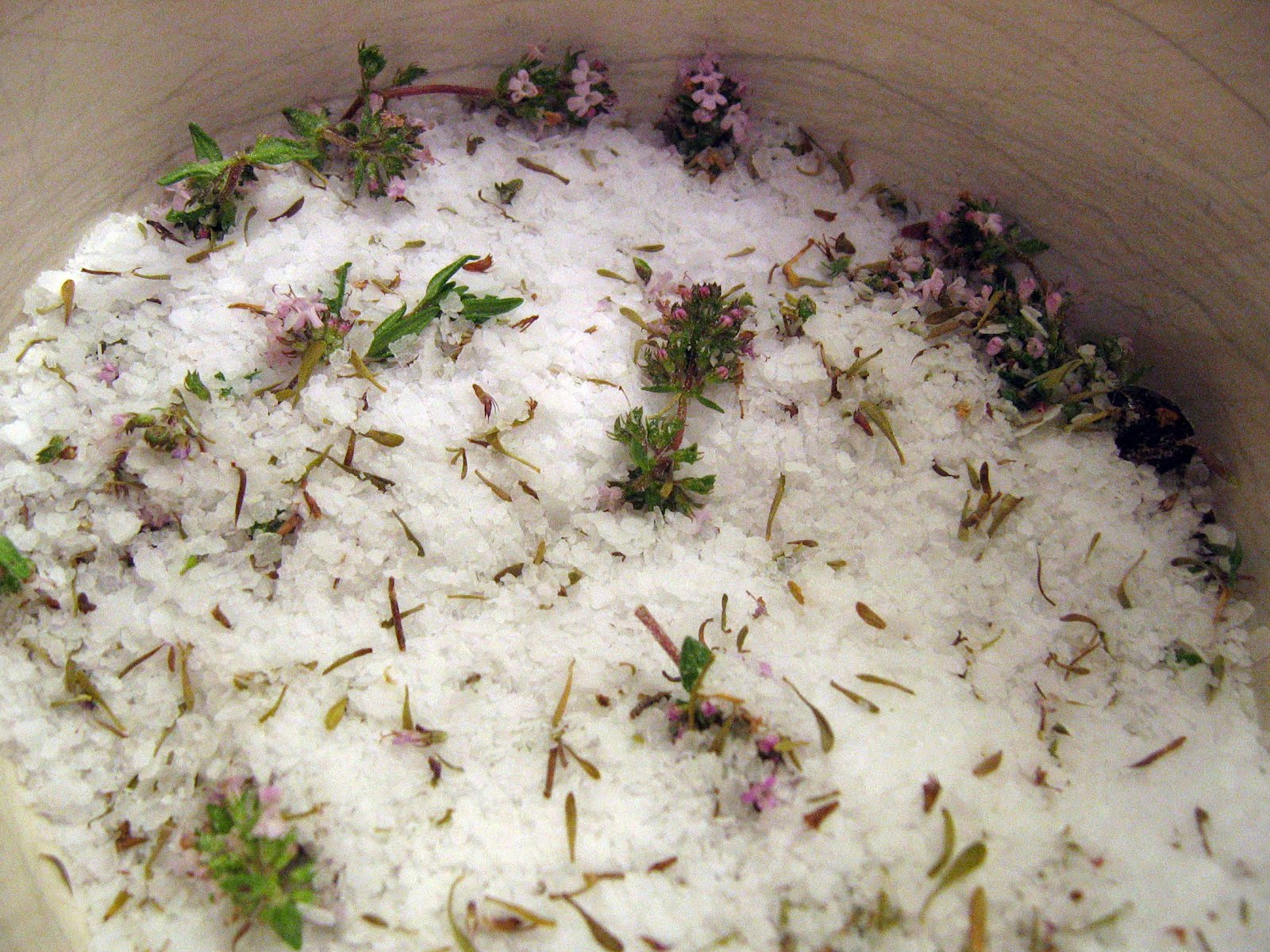
The method is very simple, you'll need about 450 grams of kosher salt for two duck breasts (or coarse sea salt, not table salt, or iodised salt), a container to cure them in, some muslin/cheese cloth, white pepper and what ever else you want to cure the duck with.
I did two different cures for each breast, one with thyme flowers and juniper berries, and the other with Szechuan pepper and coriander seeds.

You'll want to start by trimming any excess skin of the breast, but don't go crazy, just trim it so it looks nice, then give it a rinse and pat it dry. Set the breasts aside. In a bowl mix together the salt and herbs/spices. You don't
have to add any herbs or spices, you could just use salt.
In container pour a layer of the salt mix about a centimeter deep and lay the duck breast on it (flesh side down, skin side up), then cover with the rest of the salt mix, make sure there is no exposed flesh, if you're doing both breasts in the same container make sure they're not touching each other. Ideally you want to use a container that isn't much larger than the breast(s) so you don't have to waste too much salt.
Tightly cover the container and place in the fridge for twenty-four hours.

Remove the breasts from the salt, they should have firmed up, and deepened in colour slightly.

Thoroughly rinse all of the salt off the breast and dry with paper towels. Weigh the breast, and either take a note of it somewhere or make a label you can tie to it later, it's very important to know the weight at this stage.

Dust each breast with some white pepper, or another spice, I used a combination of white pepper and coriander on the Szechuan and coriander cured breast.

Wrap in a single layer of cheese cloth and tie, make sure to leave enough length to use to hang the breast. It's a good idea to add a label with the date you hung it and the weight.

Hang the breasts somewhere cool (10–15°C) and dry (60% humidity), I've hung mine under the stairs as I know it is a pretty constant 10°C no matter the outside temperature. I've seen some people hang it in their fridge, but I'd be a bit worried about cross contamination of flavours.
There are many different times given all over the internet on how long it will take to be ready, but it all depends on the humidity and temperature of where it's being hung. The best way to check if the duck prosciutto is ready, is to weigh it. When it is at 70% of its start weight, it's ready. I've just checked mine and after five days it's only lost 12%.