Thursday, April 9, 2015

Beurre Monté and cavatelli


Well I could wax lyrical about cavatelli, yet again, and perhaps bore you all to death with yet another combination of flours, toasted grains and instant potato flakes, but not today, yes this ultimately ended up as a pasta dish, a cavatelli dish, but it’s not so much the pasta as it is the sauce, in fact I ended up trying this out on two different versions of cavatelli, popcorn grits variety, that had been languishing in the freezer, as a tester, and then the finished dish with roasted rye cavatelli, both good combinations.

The sauce, and the excuse for more pasta, was heavily influenced (read, copied and modified) from Ideas in food’s bullet proof beurre monté and their later post bean monté. I had for a while wanted to have to make this extravagant sauce, with guests coming I had an excuse, plans started forming.

The great thing about the sauce and the cavatelli is they can both be prepared the day before, if not two, so it makes for a much easier cooking experience when guests are due, and heck you can even cook out the cavatelli on the day and shock it in an ice bath then refrigerate until needed, sautéing it until warm through and crisp on the edges. With the sauce, unlike a traditional beurre monté, it can be cooled down and reheated without the fear of it splitting.


Beurre Monté
250g Water*
225g Butter, cut into 1cm cubes and fridge cold.
0.7125g (0.15%) Xanthan Gum
2.375g (0.5%) Salt

  • Place the water and salt in a pot over a medium heat.
  • When at a simmer, use a stick/immersion blender to mix in the xanthan gum, blend on high speed for about 30 seconds.
  • With the blender still running, start adding the butter a cube at a time, letting each piece melt and emulsify, continue until the butter is all incorporated and the sauce thickened.
  • Taste, adjust salt if necessary.
  • Transfer to a container, allow to cool and refrigerate until needed.

*I used water that I had cooked a batch of whole rye in, and then infused it with thyme and rosemary.


Infused oil
Over a low heat, infuse a large amount of rosemary leaves and half a dozen or so garlic cloves in about half a cup of olive oil and half a cup of canola oil. Let it bubble and warm through on the heat for about 15 minutes, then remove and cover, letting it sit for a further 15 minutes to extract all possible essential oils from the wood herb. Strain and transfer to a glass jar. Keep in the fridge until all used up.

Putting it together
Place a sauté pan over a medium heat and add a splash of the infused oil, when hot, add a sprigs worth of rosemary leaves and let them sizzle. Add the cooked, drained cavatelli to the pan and sauté until just crisp, and if chilled, warmed through. Reduce the heat to low, add enough of the beurre monté to coat the cavatelli and toss until warmed through. Plate up, finish with a smothering of finely grated sharp hard cheese and a few turns of black pepper. 

Wednesday, March 25, 2015

Popcorn cavatelli


Popcorn cavatelli tossed in a little butter and garlic with, radish greens, shallots and thyme flour.

Well I was planning on moving away from cavatelli with this idea, but as I got making the dough it was just too fragile to be shaped in the way I wanted, so I adapted and bought out the trusty gnocchi board and got rolling cavatelli. I’ve pretty much posted about how to make cavatelli dough before and how to make cavatelli dough from polenta, and perhaps after this post I should take a break from posting every damn pasta idea I have, but it's been a quiet week in the kitchen. You’re going to have to forgive the lack of exact measurements, it will all depend on the amount of popcorn grits you produce and how much water is in the purée, so below is a guide but feel free to add a little extra semolina or flour to help bring the dough together.

Popcorn Grits
Follow this recipe, and then transfer to the fridge overnight.

Popcorn Cavatelli
2 parts popcorn grits purée
1 part flour
1 part fine semolina
1% salt
  • Mix all of the ingredients together in a bowl.
  • Knead to form a ball of dough.

  • Wrap tightly in cling-film and rest in the fridge for an hour.
  • Divide the dough into four.
  • Take one portion and cover the remainder.
  • Using your hands, roll out into a thin log, about a pencil width thick.

  • Cut into 1cm segments.
  • Hold the gnocchi board at an angle and place a segment on the top edge. Use the heel of your thumb push down on the dough and towards the bottom edge of the board, the dough should curl up and fall of the board.
  • Arrange competed cavatelli on a sheet pan dusted with semolina.
  • Repeat with remaining dough.

Cooking
  • Bring a large pot of salted water to a rolling boil.
  • Place the pasta in the water, don’t overcrowd the pot.
  • Cook for 4–5 minutes, they’ll float to the top when cooked.
  • Scoop the cooked cavatelli out with a sieve or similar scooping device.

Thursday, March 12, 2015

Hot water pastry–Pork Pie


Hot water pastry–Pork Pie
500g flour
200ml water
100g dripping (or lard)
80g butter
1tsp salt (5–10g)


  • Gently heat the water, butter and dripping over a low heat. Once melted bring to a boil.
  • Sieve the flour and salt together into a bowl, make a well in the centre.
  • Mix together to form a ball of dough.

  • Wrap and leave to rest for an hour at room temperature.

  • Roll the pastry into a rectangle and then fold in thirds, repeat until the dough is smooth, 2 or 3 times).

  • Roll out the pastry to about 5mm thick. Line the dish, fill and bake. I used a terrine to make this pie, it was greased with butter and then put in the fridge to set before lining with the pastry.
  • The filling was a mixture of pork, nutmeg, chilli, salt, pepper, and mustard. Half of the filling was placed in the pastry lined terrine, hard boiled eggs placed down the centre, the remaining filling tightly packed in and the whole terrine banged to dislodge any air bubbles.

  • An egg yolk wash was brushed on before laying the pastry lid, with air vents cut out, on top and crimping the edges, then a final egg yolk wash.
  • Cook in a 200ºC oven for 30 minutes before lowering the temperature to 180ºC and cooking for a further hour.

  • Allow the pie to cool in the dish completely before carefully turning out. Best served room temperature with some relish or hot mustard.

Wednesday, March 4, 2015

Hot thighs


Well I had planned to actually deep fry the chicken, you know go the whole hog, brine, dredge, egg wash, fry and get greasy spicy chilli oil everywhere. However the day kind of got away from me and quite frankly I had lost all motivation to get a pot full of oil and control temperatures, and then clean up the mess, so I looked to my previous tried and trusted methods of oven “fried” wings, spiced it up and adapted it for some juicy thighs. There aren’t really any proper quantities below, they are all to taste, it’s more the method of getting pieces of chicken with a crunchy exterior and a steamy moist interior without having to resort to deep frying. The method is a little more time consuming than chucking a bunch of chicken in a hot oven and cooking, but not by much.

  • In a large bowl mix together flour, salt and cayenne pepper, as much or as little as you want, go a little heavy on the salt as it will be the only seasoning the chicken will get.
  • Toss the chicken pieces through the flour mix, make sure to pat the mix into all the crevices. Place on a sheet pan with a rack and refrigerate uncovered for an hour.
  • Get two bowls out, in one get an egg wash ready, 50/50 mix of egg and water, in the other mix together 1 part flour and 1 part semolina, spice with cayenne and chilli flakes.
  • Dip the chicken in the egg wash and then dredge in the flour mix, return to the rack. Refrigerate uncovered for at least an hour, you could do this the day before.
  • Preheat the oven to 220ºC, remove the chicken from the fridge 10–15 minutes before cooking, place the tray in the oven and cook for 10 minutes. The short cooking time is to “set” the coating in place before meddling. Reduce the heat to 200ºC.
  • Remove and brush the top of the chicken with chilli oil (store bought or canola blitzed with dry hot chilli flakes), return to the oven and cook for a further 20 minutes.
  • Remove from the oven, turn the chicken over and brush the exposed side, return to the oven for another 20 minutes.
  • Last time, remove the chicken, flip it, don’t bother brushing it, you shouldn’t need to, cook for a final 10 minutes.
  • Transfer the cooked chicken to a cooling rack to rest for a 10 minutes, lace with hot sauce and devour with a cooling slaw and pickles, always pickles.

Wednesday, February 25, 2015

Polenta Cavatelli


There has definitely been an abundance of pasta, particularly cavatelli, recipes appearing on this blog lately, I am a little obsessed. Maybe it’s how easy fresh pasta is to throw together, or that you can customise, tweak and adjust it to your hearts content, probably a little bit of both. I have had polenta pasta on my mind for a while and have been trying to think it through before delving in head first and possibly wasting perfectly good product. After having some success with masa cavatelli it seemed like the perfect vehicle for polenta, I still had a couple of issues to resolve, polenta takes a while to cook through and what was going to bind the dough together, I didn’t want to rely on wheat flour for structure as I did with the masa. I settled on the idea of precooking the majority of the polenta, letting it set and then making a purée out of it, that would be the base of my dough, uncooked polenta and fine semolina were used to bring the purée together as a dough, I think if I used 100% polenta the cavatelli would be a wee bit dense.


I think I’ve mentioned it before but making too much cavatelli is never a problem, it freezes extremely well and can be cooked from the frozen, just allow a couple more minutes cooking time. The quantities below should be enough for four portions, so any unused raw cavatelli can be arranged on a sheet pan and placed in the freezer until solid and then transferred to a zip-lock bag for more permanent storage.


Polenta Purée
1 part polenta (50g)
5 parts water (250g)
  • Place a rack or trivet on the bottom of a pressure cooker.
  • Pour in an inch of water.
  • Pour the ingredients into a heatproof bowl that will fit in the cooker.
  • Cook on high pressure for 30 minutes.
  • Allow the pressure to drop naturally.
  • Remove the cooked polenta and when cool transfer to the fridge. Best left overnight.
  • Purée the cooled cooked polenta, I used a fine mouli but a food processor is probably easier, I just don’t own one.

Polenta Cavatelli
2 parts polenta purée (250g)
1 part polenta (125g)
1 part fine semolina (125g)
2% salt (10g)
  • Mix all of the ingredients together in a bowl.
  • Knead to form a ball of dough, add a splash of water if you need to.
  • Wrap tightly in cling-film and rest in the fridge for an hour.
  • Divide the dough into four.
  • Take one portion and cover the remainder.
  • Using your hands, roll out into a thin log, about a pencil width thick.
  • Cut into 1cm segments.
  • Hold the gnocchi board at an angle and place a segment on the top edge. Use the heel of your thumb push down on the dough and towards the bottom edge of the board, the dough should curl up and fall of the board.
  • Arrange competed cavatelli on a sheet pan dusted with semolina.
  • Repeat with remaining dough.

Cooking
  • Bring a large pot of salted water to a rolling boil.
  • Place the pasta in the water, don’t overcrowd the pot.
  • Cook for 4–5 minutes, they’ll float to the top when cooked.
  • Scoop the cooked cavatelli out with a sieve or similar scooping device.


Sauce (for 2 portions)
Large knob of butter
2 large garlic cloves, crushed to a paste
2 tomatoes, skinned, de-seeded and finely diced
1 Lemon, juice and zest
Parsley, finely chopped
2-3 handfuls of rocket (arugula)

  • Before the pasta goes in the water get a sauté pan on a medium heat.
  • Melt the butter gently in the pan, add the garlic just as the pasta is going in the water.
  • Gently sauté the garlic, you don’t want any colour, just cook out the rawness.
  • Add the tomatoes and cook until they start to break down.
  • Add a tablespoon or two of the pasta water, swirling and stirring through. The starch in the water will help emulsify the sauce and keep it from splitting. Keep adding water and cooking down until you have a nice thick sauce, probably about a third of a cup in total.
  • Just before the pasta is cooked, taste the sauce, add half the lemon juice and zest, adjust the seasoning with salt. Taste and decide if you need the rest of the lemon juice, you may not.
  • Scoop the cavatelli into the sauté pan and toss through the sauce, add the parsley and rocket, toss through and cook for 30–60 seconds more, just enough to wilt the rocket.

Serve with some good sharp hard cheese grated generously over top.

Wednesday, February 18, 2015

Spiced masa cavatelli


Well I have had a bag of masa in the pantry for a while, I have been using it, making tostada (a crispy fried flat tortilla topped with tasty things), regular tortillas (I even bought a tortilla press) and not least of all tamale. So I guess it’s a little odd my first post about masa is a pasta, there is more than enough information online regarding making the more traditional items and I’m not sure I’ve got much to add to the subject, yet.

This pasta came about due to the fact I had a container full of braised beef leftover from tortillas the previous night and a desire not have a meal rerun. When possible I try to re-purpose leftovers, it’s far too depressing to eat the same thing night after night. The usual suspects ran through my mind while trying to think of something new to do, nachos, tostada, enchilada, quesadilla, the apple not really falling far from the tree as far as ideas go. Still on my pasta making buzz, much to the chagrin of the better half, I mean I make it and eat it a lot, heck if it’s not pasta at the moment, it’s spicy noodle soups. Anyway, I had this idea of pasta nachos, make a pasta that can handle a good sauté to crisp up a bit and take a good thick braise based sauce. I thought of gnocchi and maybe revisiting the potato chip version, but I figured it would probably be best to keep on topic flavour wise so nixed that idea, masa and tortillas still banging about in my head I got to thinking if I could use it to make pasta, I couldn’t think why not, and cavatelli seemed like the perfect choice. I only wish I had a blowtorch (with a Searzall) in the house, I mean it’s the one gadget I’m lacking, but it would have been great to have the pasta tossed in the sauce, plated, topped with cheese and hit with a hot flame to really bubble and crisp up before garnishing.


Spiced masa cavatelli
100g instant masa
170g fine semolina
100g flour
280g salted water (265ml water +15g salt)
10g spice mix*

*In a spice mill, blend equal quantities of annatto, coriander seeds, and cayenne to a fine powder.
  • Mix the dry ingredients together and form a well in the centre.
  • Pour in the salt water and work the flour in to form a dough ball.
  • Knead until smooth, about 8 minutes.
  • Wrap tightly in cling film and let it rest on the bench 30 minutes.
  • Divide the dough into four.
  • Take one portion and cover the remainder.
  • Using your hands, roll out into a thin log, about a pencil width thick.
  • Cut into 1cm segments.
  • Hold the gnocchi board at an angle and place a segment on the top edge. Use the heel of your thumb push down on the dough and towards the bottom edge of the board, the dough should curl up and fall of the board.
  • Arrange competed cavatelli on a sheet pan dusted with semolina.
  • Repeat with remaining dough.
  • Store the tray of pasta at room temp until ready to cook. Alternatively place the tray in the freezer, when frozen solid transfer the pasta to a zip lock bag. The pasta can be cooked straight from frozen.


Cooking
  • Bring a pot of heavily salted water to a rolling boil.
  • Place the pasta in the water, don’t overcrowd the pot.
  • Cook for about 5 minutes, they’ll float to the top when cooked.
  • Scoop the cooked cavatelli out with a sieve or similar scooping device.
  • Sauté in a hot pan with butter to give a crisp exterior.
  • Toss through a sauce and serve.

Tuesday, February 10, 2015

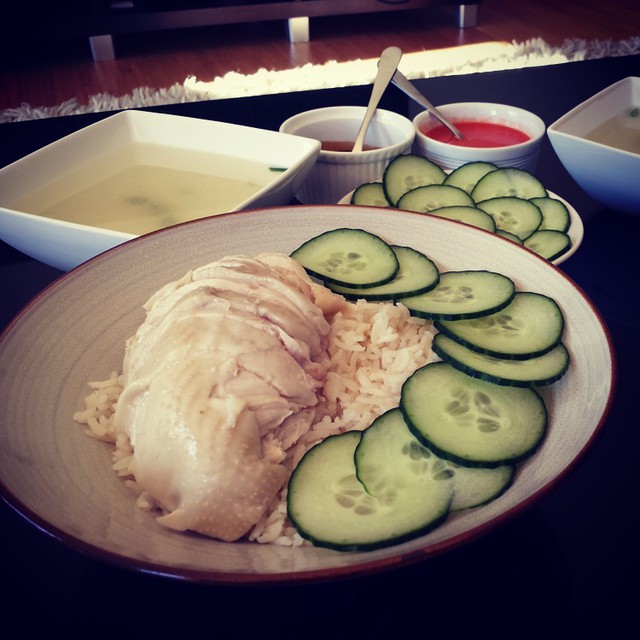
Hainanese chicken


I haven’t really been terribly experimental in the kitchen lately, rather visiting old favourites such as pulled noodles, spicy chicken, playing around with pastas, and tonnes of salads. Nothing that jumps out as I must post about this! Mind you that’s what instagram and twitter is for I guess, share the meal not the recipe. It’s not so much the food is dull, it’s more that I have either posted about it before or I don’t think you really need another recipe for braised brisket and tostadas, which by the way fish sauce; miso; and ground shiitake can turn a “Mexican” braise into a savoury bomb!

Anyway, here’s a recipe I cobbled together for Hainanese chicken, a deeply satisfying dish and not too heavy at all, best of all it’s a doddle to cook.


Chicken
1 Whole chicken
Spring onions
Ginger
Ice
  • Pull excess fat out of chicken cavity and set aside.
  • Rub the chicken skin with kosher salt until it becomes smooth and taut.
  • Rinse and pat dry.
  • Season thoroughly (heavily) inside and out.
  • Stuff tightly with spring onions and ginger.
  • Place in a pot and cover with water, about 2 cm above the bird.
  • Bring to a boil and then turn the heat down low.
  • Simmer for about 30 minutes, skimming scum as it forms. It’s done when the internal temp is 76ºC.
  • Carefully remove from the pot and submerge in an ice bath.
  • Retain the cooking liquid, this is the soup and rice cooking liquid.

Rice
2 Cups jasmine rice
3 Garlic cloves, finely chopped
1 Thumb of ginger, finely chopped
Reserved chicken fat
½ Tsp sesame oil
2 Cups of reserved cooking liquid
  • Rinse the rice until the water runs clear, soak for 10 minutes.
  • Sauté the ginger and garlic in the chicken fat, be careful not to burn or over brown.
  • Drain the rice and add to the pot, sauté and then add the sesame oil.
  • Add the cooking liquid and bring to the boil.
  • Reduce heat to low and cover.
  • Cook for 15 minutes, don’t peek, just leave it be.
  • Remove from the heat and let it rest for 5–10 minutes, again leave the lid alone.

Broth
Heat the remaining cooking liquid and season with salt as needed, garnish with sliced spring onions.


Chilli sauce
Look you could probably just cheat and use good ol’ Sriracha, I wouldn’t think any less of you, in fact I use a fermented chilli sauce as my base.

4 tbsp Fermented chilli sauce, use your favourite
1 lime, juiced
2 tsp sugar
2 tbsp cooking liquid, more or less
4 cloves garlic, crushed to paste
1 thumb of ginger, crushed to paste

Mix all of the ingredients together, apart from the liquid, use the cooking liquid to loosen it to a desired consistency. Taste and season, a little fish sauce is nice instead of salt.

For the Table
Dark soy sauce
Chilli sauce
Sliced cucumber

Serve
It’s really up to you how you want to serve up, I like a bowl of the rice with some of the chicken carved on it and garnished with cucumber. Rub the chicken with a bit of sesame oil before carving to make it a bit more aromatic.

Friday, January 30, 2015

Potato Chip Gnocchi


These gnocchi use instant potato flakes in place of a baked potato, which means you can manipulate the flakes and moisture levels quite easily. I toasted the flakes in a hot oven until golden brown and smelling more than a little reminiscent of a bag of potato chips.

The sauce I served was a pretty simple broken sausage, thyme, shallots and some passata, dressed with a little cheese, parsley, sweet corn and radish slices.

60 g potato flakes (1 cup)
250 g boiling water (1 cup)
1 egg
6 g smoked salt
150 g flour (1 cup)


  • Spread out the potato flakes on a sheet pan and bake at 180ºC for 5 minutes, they should be golden brown and will burn pretty quickly, so keep an eye on them.
  • Transfer the flakes and salt to a bowl and pour on the boiling water, stir through and cover. Let it stand for 5–10 minutes.
  • Mix the egg through.
  • Add the flour and bring together into a ball of dough, do not overwork the dough.
  • Wrap in cling-film and rest in the fridge for half an hour.


  • Divide the dough into four, gently roll a portion of the dough into a log about the width of your thumb.
  • Use a sharp knife and cut into 1cm slices.


  • The dough pretty fragile and easily mashed, use either a fork or gnocchi board and roll it down the ridges. Place on a tray dusted with semolina flour. Repeat with the remaining dough.
  • Poach in salted boiling water for a couple of minutes, they should float to the top when cooked. Toss through some sauce and devour.

Friday, January 23, 2015

Salad days


The new year is a great time to catch up on the healthy eating after the ever over indulgent Christmas period. Salads heavy with grains and sprouts seem to be my main go to when I feel I have delved too much into gluttony, filling, satisfying and healthy! My basic salad is pretty much the same and things get swapped in and out to customise as I feel like, poached chicken or paneer, rice; quinoa or wheat, you get the picture. At the base it’s usually vinaigrette, red onion, sprouts (home done puy and mung if I’ve thought ahead a couple of days), celery (always, I love it) leaves and all, parsley. And then it’s usually an addition of whatever I have handy in the fridge or garden, thyme flowers, shaved broccoli florets, radish, leftover roast chook.


There are things I tend to avoid in my grain salads mainly because they don’t last in the fridge and when I make a salad there’s always leftovers for lunch the next day. Green leaves, they don’t last in a dressing at all and quite frankly I usually have a metric ton of celery greens and parsley in there any way. Tomatoes, they turn to mush in the fridge and I’m not really a fan of them in any salad unless it’s a tomato based one. Eggs, unless it’s a perfectly soft boiled one sliced in half and placed on each serving.


Sprouts are a great way to get a bunch of flavour into a salad, and even better if you can prep them yourself. Get a jar and place in a third of a cup of seeds (mung, lentils, mustard), rinse with water and let soak for 4–8 hours. Drain and cover with a cloth or tea towel, keep out of direct sunlight. Rinse and drain daily. Sprouts should be good to eat in 2–3 days, once the sprout is the length of the seed.


Nuts and seeds are also add good texture and flavour, I’m a bit guilty of going crazy with pumpkin seeds, I can’t help myself. Try toasting some nuts and seeds in a dry pan with a bit of salt and chilli then giving it a bash in a mortar and pestle, or roughly blitz in blender. Adds a bit of crunch and spice scattered over the top.

Grains, the staple are so easy to cook once you have the hang of them, they all pretty much get cooked the same way just the timing is different. Bring 1 cup of grains and 3 cups of salted water up to the boil, cover and reduce heat to low. Rye and Wheat take about 30 minutes, Red and Black Rice about 18 minutes.


Dressings are pretty simple, a quick vinaigrette is my usually go to, 1 part acid, 2 parts oil, Dijon mustard and salt, pour all in a jar and shake. Cider vinegar is always on hand for this, but lemon juice, white wine vinegar are all good too. Tahini makes quite a nice eggless mayo, use the above quantity for the base dressing, perhaps a little less oil and add a little crushed garlic, add a good tablespoon of tahini and blitz with an immersion blender, goes well with some grilled paneer.

Monday, January 12, 2015

Christmas Pork


Well I hope everyone had a good break, I probably over did the sun, food and drink a bit too much, but then again that is what the holiday season is about. I got lazy with a brew and instead of bottling it I put it on top of a kilo or so of raspberries, a choice I would repeat.


I managed to secure a good 4.5 kg chunk of pork belly for the festive day, the plan was to roll it and rotisserie, but the BBQ could only take 3 kg length, so the smaller chunk went into a brine and then eventually into a slow oven to cook out chill and roast again on boxing day for a post festive dinner, excessive yes, but waste not want not.


The remaining 3 kg was massaged skin side with some kosher salt to remove impurities, the inside was smeared with crushed garlic, rosemary, thyme, lemon rind, salt, chilli. A brined pork fillet laid down the centre and the belly rolled around. the whole log tied together in a butcher's knot.


The small addition to the rotisserie was potatoes. So the spit was loaded and the flame set to medium and drip pans set and loaded with new potatoes placed right below the rolled pork and then the pork set and forget for 3 odd hours.


The exterior was golden brown, skin tooth crackling crunchy, and the interior was moist and fragrant, being constantly basted in the spiced herby melting fat as it rotated slowly.